

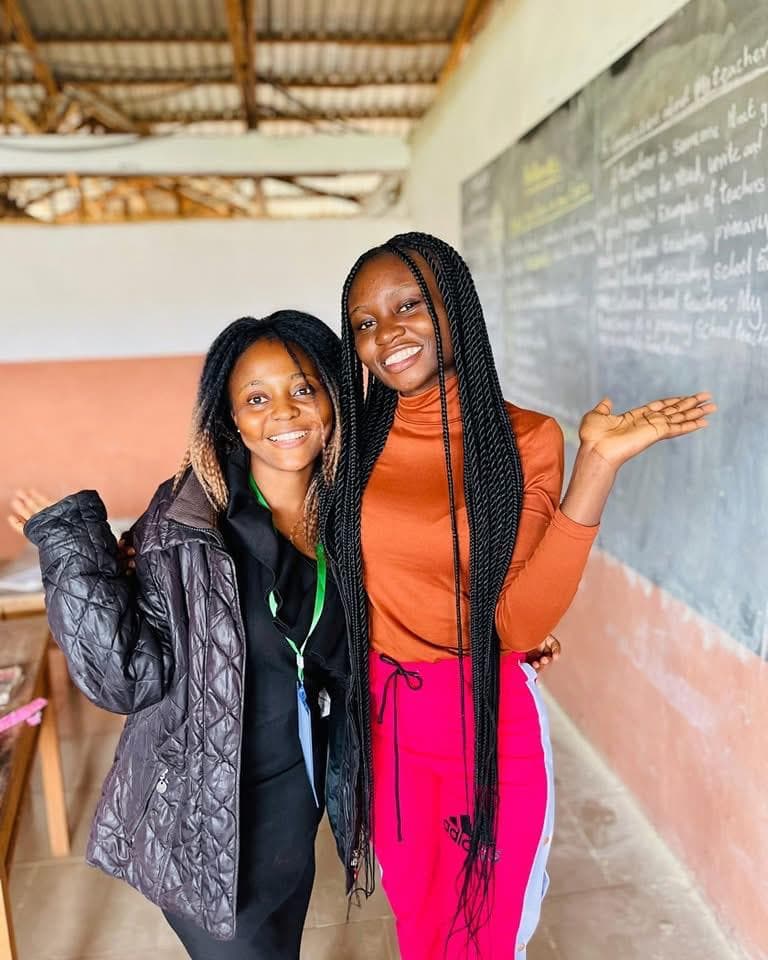
On Wednesday 24 June 2026, Giiyo Tech spent four hours in the Palace Hall at Bamendankwe, in Cameroon’s North West region, with a room full of young people who wanted a straight answer to one question: where are the real opportunities in the digital economy, and how do I reach one of them?
The session was a free Youth Financial Empowerment Seminar, hosted as part of the Bamendankwe Prayer and Thanksgiving Conference 2026 at the invitation of Rev. Dr. Prosper Numfor of Holistic Prosperity Ministry. It was facilitated by Wepngong Maureen, Founder of Giiyo Tech. The theme was simple enough to fit on the flyer: turning technology into opportunity.
We opened by saying what the day was not
Most seminars for young people start by promising the world. This one started by narrowing it, deliberately, in the first ten minutes.
What today is not: a coding bootcamp. You are not going to walk out a web developer. That takes months, not hours, and anyone who tells you otherwise is selling something.
What it was instead: a map. An honest tour of where income is actually being earned online, what each path demands, and where to find the depth afterwards. Being clear about the limits of a single day is what buys the credibility to be useful within it. Nobody in that room needed another motivational talk. They needed to see the landscape and pick an entry point.
The challenge has changed, and most people have not noticed
Ten years ago, the barrier for a young person in Cameroon was access. Data was expensive, smartphones were uncommon, and getting online at all was the hard part. That problem is largely solved. Almost everyone in the Palace Hall that morning had a smartphone in their pocket and an internet connection.
So the barrier moved, and it moved somewhere less visible. The question is no longer whether you can get online. It is what you do once you are there.
Two people can have the exact same phone and the exact same internet. One uses it to scroll for six hours. The other uses it to learn a skill, find a client, and build something. Same tool. Completely different life.
The word we kept returning to was intention. Using technology on purpose, rather than by habit, is the entire difference between a device that consumes your time and a device that builds your future.
Technology is not a separate industry you either join or you do not
One belief does more damage than almost any other: the idea that technology is a room you either walk into or stay out of, and that you have to abandon what you love in order to enter it.
Education, agriculture, healthcare, commerce, communication, entertainment, governance and employment now all run on digital systems. If you love farming, that is agritech. If you care about health, there is a whole field of digital health. If your thing is fashion, music or storytelling, that is content, e-commerce and platforms.
Technology is not a room you walk into. It is a layer on top of whatever you already care about. Find your thing, then add tech to it.
We tested it live. Participants called out things they loved that had nothing to do with technology, and each one was connected to a digital angle on the spot. The point lands better when the room supplies the examples.
Nine doorways into the digital economy
The centre of the seminar was a practical tour of how people actually earn online. Nine pathways is more than anyone can hold in their head, so we grouped them into four clusters.
1. Sell what you can do
Freelancing, digital services and remote work. Writing, design, translation, data entry, virtual assistance. You have a skill, and the client can be anywhere on earth. Platforms such as Upwork and Fiverr exist entirely for this, and people in Cameroon are earning in foreign currency through them today.
2. Build an audience
Content creation and digital marketing. You build a following around something you know or love, and you earn through brands, products and promotion. The barrier to entry is close to zero: a phone and consistency.
3. Build the things
Web development, and increasingly artificial intelligence. You build the platforms and tools other people use. This is the deepest path and takes the most learning, and it has the highest ceiling.
4. Trade and the frontier
Online business, selling beyond your street and beyond your town, plus Web3 and blockchain as the emerging edge. Newest and least certain, and early movers hold an advantage. Our founder came to international blockchain governance through exactly this route, serving as a Constitutional Delegate during the creation of the Cardano Constitution.
Nobody does all nine, and trying to is how people end up doing none of them well. The instruction to the room was to notice which cluster made them lean forward, and to hold onto that feeling until the final exercise.
Then we stopped talking and started working
After the break, the seminar changed shape. Phones down, chairs turned, groups formed. The task was to name one real problem in their own community, with one rule attached that matters more than anything else we said that day.
Do not reach for the technology yet. Do not tell me we will build an app. Start with the problem. Who does it hurt? How often? What does it cost them? Sit in the problem first.
The best solutions come from people who understood a problem deeply, not from people who had an exciting tool and went looking for somewhere to use it. That order is the difference between a project that survives and a prototype nobody asked for.
The problems the groups brought back were not small. Insecurity. Gender-based violence. Flooding during the rainy season. Unemployment. This is worth saying plainly, because it shapes what these sessions have to be: young people in Bamendankwe were not looking for a hobby project. They named the things that are actually pressing on their communities, and then asked what technology could realistically do about them.
Watching a plan appear in two minutes
We took one problem straight from the room and walked it through four questions in front of everyone: find the problem, work out who it affects and how often, only then imagine a technology-enabled fix, and finally sketch a single first step that could happen this week.
The fix does not have to be impressive. For a problem about students missing class because schedule changes never reach them, the answer might be a WhatsApp broadcast list or a Telegram channel. The first step is to create the group, add ten people, and test it. That is a real project, born in a seminar room.
Then came the part that made artificial intelligence concrete rather than theoretical. A real prompt, typed into an AI tool on screen, asking it to plan that exact solution. The room watched the plan generate in front of them.
Two minutes ago this was just an idea your group had. Now there is a plan. That is not magic. That is a tool, and by the end of today you will know where to get it.
We ran the same demonstration for a business plan, a CV and a marketing campaign, and asked the room a single question: how many hours would each of those have taken before? For most people in that hall, this was the first time they had seen an AI tool used for something they might genuinely need, rather than described in the abstract.
Nobody left without writing something down
Inspiration without action is just entertainment, and a day like this succeeds or fails on what happens in the week that follows. So the final stage turned the attention back on each participant.
Four questions, answered privately and honestly: What am I curious about? What am I already good at? What problem do I want to solve? What skill could I start this week?
Then everyone wrote three things down, on paper or on their phone, in real silence:
- One opportunity to explore further, from the nine pathways
- One skill to start learning, the first one on that path
- One step to take in the next seven days, as small as watching a tutorial, creating an account, or sending a single message
A plan you can see is a plan you might actually follow. That written page is the thing that outlives the room, and several participants read theirs out loud before we closed.
What the participants left with
- Awareness of where the opportunities in the digital economy actually are
- A habit of continuous learning, because there is no finish line in this field
- A practical sense of how AI and digital tools are used, having watched it happen rather than only hearing about it
- A realistic next step, written down, rather than a vague ambition
- A community to keep growing with
That last one is the one people underestimate. The most common outcome of an inspiring day is two days of enthusiasm followed by a quiet return to exactly how things were. Staying connected to people who are building and learning is what prevents that.
Why this seminar mattered to us
Giiyo Tech works with young people across Cameroon, and our purpose is to move people from using technology to building with it. Most of that work happens in schools, through STEM clubs, bootcamps and an annual summit. Bamendankwe was different, and useful because it was different: a room of young adults, most of them past school age, asking what to do now.
It also took us into the North West. Giiyo Tech has now reached more than 500 learners across seven cities in five regions of Cameroon, and Bamendankwe is the delivery that put the North West on that list.
The seminar was free to attend, and it happened because a community invited us. That is the model we would like to repeat: a local host who knows their young people, a venue, and four focused hours.
Bring this seminar to your community
The format travels. It needs a hall, a screen, an internet connection and four hours, and it works for a church, a school, a council, a youth association or a community group anywhere in Cameroon. It can be delivered in English or French.
If you would like to host a Youth Financial Empowerment Seminar, or you are a partner interested in sponsoring one, get in touch with Giiyo Tech at hello@giiyotech.com and we will find a date.
Our sincere thanks to Rev. Dr. Prosper Numfor and the Bamendankwe community for the invitation and for opening the Palace Hall, and to every participant who showed up, asked difficult questions, challenged ideas and did the work. The curiosity in that room is the reason the day worked.
Opportunities rar
ely arrive fully formed. Most opportunities are created.
Bring a STEM club to your school
See how our school clubs work, then tell us about your school and the activities you would like your students to explore.
Maureen
Founder
Maureen Wepngong is the Founder of Giiyo Tech, where she leads the organisation’s strategy, programme development, partnerships and growth. Her work focuses on creating practical STEM learning opportunities that help young people build, experiment, solve problems and become more confident creators of technology. Through Giiyo Tech, she develops programmes in areas such as robotics, coding, digital literacy, cybersecurity and innovation, while building partnerships that expand access to hands-on learning across Cameroon.
Join the conversation
Leave a comment
Be the first to share your thoughts on this article.