

Seven students and seven live projects.
People often assume that teaching technology to young people in Cameroon has to start with theory. Explain what a computer is, explain what the internet is, spend weeks on definitions before anyone writes a line of code. We do the opposite. On the first day of the Giiyo Tech bootcamp, every student had a webpage running before the session ended.
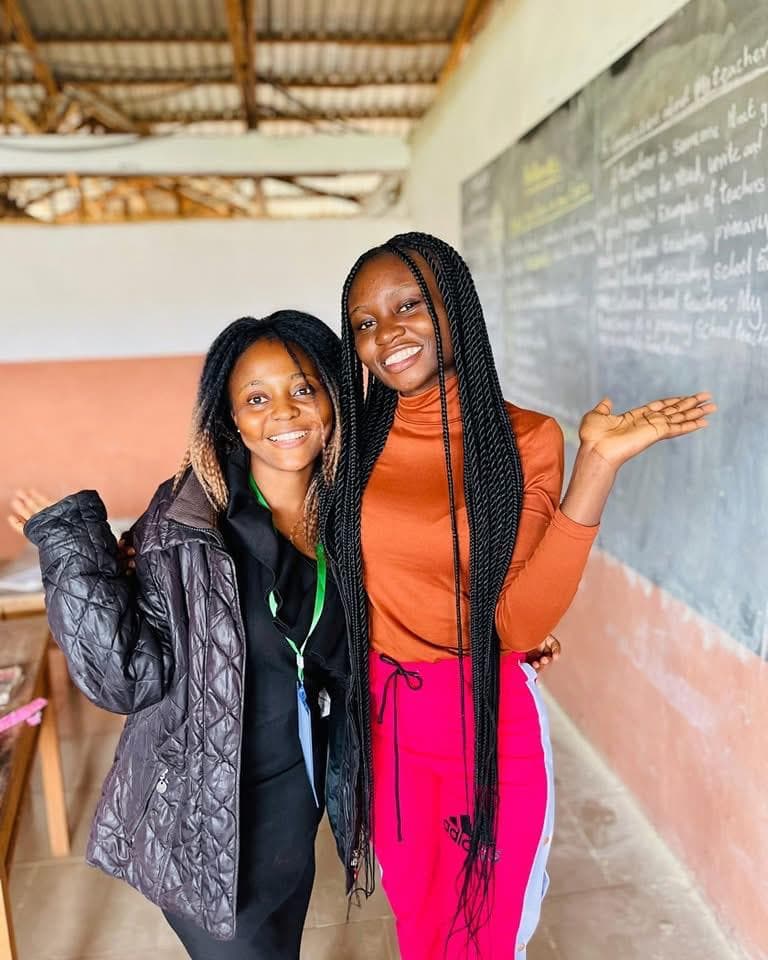
Today we wrapped that bootcamp at Olive Bilingual School in Bonaberi, Douala. It ran from 29 June to 29 July 2026, five weeks of Mondays and Wednesdays. Seven students, aged 7 to 16, from different schools and different backgrounds, several of whom had never written code before. By the end, every one of them had designed, built and deployed their own application to the web using github pages.
Learning to code by building, not by watching
The best way to learn technology is to create with it, so the students started with HTML and learned how to structure a page. From there they moved to CSS, where colours, layouts, animations and responsive design turn plain text into something people actually want to use. Then came JavaScript, the point where a website stops being a static page and becomes an application that responds to you. By the end they had built dark mode toggles, interactive forms, quizzes, animations, local data storage and dynamic interfaces using real JavaScript, not simplified classroom tools.
Using the tools professional developers use
Rather than keeping students inside beginner environments, we put them in the same tools working developers open every morning. They learned to write code in Visual Studio Code, preview their work with Live Server, and organise projects into proper folder structures.
They also learned one of the most important skills in modern software development: Git and GitHub. Every student now has their own GitHub account, understands commits, repositories and version history, and has published live projects using GitHub Pages.
Learning AI the right way, which means learning where it fails
Artificial intelligence was a major part of the bootcamp, but not in the way people expect. Instead of teaching students to trust AI, we taught them to interrogate it.
One of our favourite moments came when we asked Gemini about an award that has not happened yet. It confidently invented a winner, a film and a director, all of it fabricated, all of it delivered with total certainty. Watching a hallucination happen live teaches more than any warning could.
From there the students learned prompt engineering, and how to work with GitHub Copilot inside VS Code without letting it think for them. One rule held all the way through:
If you cannot explain the code, it is not your code yet.
Designing before building
Technology is not only about writing code, so the students also learned the fundamentals of visual communication in Canva: colour, typography, spacing, hierarchy and layout. Every student designed a logo and a launch flyer for their own application before presenting it to the class.
The projects
This is where the bootcamp stopped being a coding class. Rather than assigning generic exercises, every student built an application inspired by a problem they recognise from daily life in Cameroon.
Market Alert
Built by Adriel, 15. An application for tracking market prices and product availability, making everyday shopping decisions easier while introducing organised data, categories and modern web interfaces.
Présence+
Built by Tanui, 11. A classroom attendance system inspired by watching teachers spend lesson time taking attendance on paper. Teachers can manage a class list, record attendance, review history and keep simple statistics.
PowerPlan
Bright's second application. Studying around power cuts is a problem every student in Cameroon knows, whether the outage is scheduled or arrives without warning. PowerPlan builds a study schedule that fits into the hours you actually have electricity, with reminders that work around the blackout instead of pretending it will not happen.
Ça Va?
Built by Osong, 11. Mental wellbeing matters too. A daily mood journal where you record how you feel, add a personal note, and build a picture of your own emotions over time. A simple reminder that technology can help us understand ourselves.
DevoirNaPocket
Built by Yann, 7. A homework tracker that organises assignments by subject, deadline and priority. Watching one of our youngest students build and publish a working application reminded everyone in the room that age is not a barrier to building technology.
Petit Feu Rouge
Built by Stevie, 16. An educational game that teaches road safety through play. Players react to changing traffic lights while the game steadily speeds up.
Santé Bop
Built by Kevin, 15. An interactive malaria prevention quiz that does more than mark answers right or wrong. Every question teaches the prevention tip behind it, so players finish knowing something they did not know before.
RouteClaire
Built by Bright, 12. Inspired by a problem familiar to anyone who travels through Douala in the rainy season, RouteClaire lets people report roads affected by flooding so others can make better decisions before leaving home.
Health, education, transport, wellbeing
Look at that list again. Health, education, mental wellbeing, road safety, transport, homework, local commerce. Not one of these applications was copied from a tutorial. They were imagined and built by young people solving problems they see around them every day.
Learning is not neat
The bootcamp was not smooth, and that is exactly how learning works. Files ended up in the wrong folders. One student placed their index.html a directory too deep and spent twenty minutes wondering why GitHub Pages returned a 404. The internet disappeared on us more than once. AI generated code that looked convincing and broke the application anyway, and the students debugged it themselves. None of that interrupted the learning. All of it was the learning.
More than a bootcamp
Giiyo is a Limbum word meaning "do yours." Not copy someone else's. Not watch someone else's. Build yours.
Today seven young people walked out of our classroom with GitHub accounts, live websites and the confidence that comes from having built something real. Most importantly, they left knowing they are capable of building technology rather than only consuming it.
That is a good place to start.
Bring a STEM club to your school
See how our school clubs work, then tell us about your school and the activities you would like your students to explore.
Giiyo Tech
Content Team
The Giiyo Technologies content and communications team.
Join the conversation
Leave a comment
Be the first to share your thoughts on this article.